


Fencing Equipment Guide for Beginners: What You Need to Start
- Apr 7
- 12 min read
Target Keywords: fencing equipment HK, fencing gear Hong Kong, beginner fencing equipment, what do I need to start fencing
Schema: BlogPosting + Product + FAQPage + HowTo
Starting Your Fencing Journey: Equipment Essentials
Walking into a fencing club for the first time can feel overwhelming. Masks, jackets, weapons, wires – there is a lot of gear involved in this elegant sport. But do not worry. This comprehensive guide will walk you through everything you need to know about fencing equipment for beginners in Hong Kong.
The good news? You do not need to buy anything to start. Most fencing clubs, including HK Fencing Master, provide all beginner equipment. This guide will help you understand what you are using and when you might want to invest in your own gear.

Understanding Fencing Equipment Categories
Protective Gear – The Essentials
Let us begin with the most important category: protective gear. Your safety in fencing depends entirely on wearing properly fitted, certified equipment every time you step onto the piste.

The Fencing Mask
The mask protects your face, neck, and throat during bouts. It consists of a metal mesh front that can withstand twelve kilograms of pressure, a bib that covers your throat area, an adjustable back strap for a secure fit, interior padding for comfort, and conductive material for electric scoring in foil and sabre.
When choosing a mask, look for proper fit – it should not move when you shake your head. Ensure it carries a CE certification mark, offers good visibility through the mesh, has comfortable padding that does not pinch, and features a secure fastening system that stays put during intense action.
Before every training session, check the mask condition carefully. Never fence with a damaged mask. Ensure the bib properly covers your throat, and clean the padding regularly to maintain hygiene. A basic mask costs between four hundred and eight hundred Hong Kong dollars. Mid-range options run from eight hundred to fifteen hundred dollars, while competition-grade masks can cost fifteen hundred to three thousand dollars.
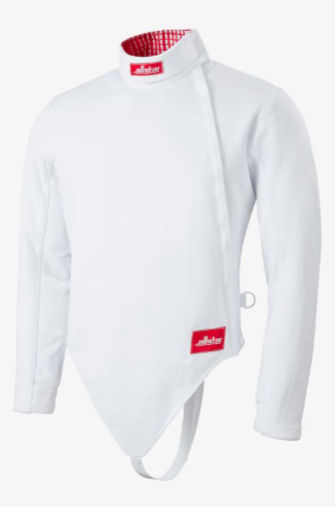
The Fencing Jacket
The jacket protects your torso, arms, and upper body from hits. Three main types exist. Cotton jackets are traditional, breathable, but require breaking in. Synthetic jackets made from Dyneema or Inox are lightweight, durable, and machine washable. Stretch jackets offer a modern, form-fitting design with excellent mobility.
Key features to understand include the puncture resistance rating, which is either three hundred fifty Newtons or eight hundred Newtons. The jacket fastens with either a zip or velcro closure. Sleeves should reach all the way to your wrist. The tail should cover your lower back properly.
When selecting a jacket, proper fit is everything. You need enough room to move freely, but the jacket should not be so loose that it catches your opponent's point unnecessarily. Make sure you choose the correct side for your dominant hand – right-hand fencers wear jackets that fasten on the left, and vice versa. Comfort for your entire training duration matters greatly.
Start with club-provided jackets. If you decide to buy, consider synthetic fabrics for easier care. Check your jacket for wear regularly, especially along the seams and in high-impact areas. A basic three hundred fifty Newton jacket costs six hundred to one thousand dollars. An eight hundred Newton mid-range jacket runs one thousand to two thousand dollars, while competition-grade eight hundred Newton jackets cost two thousand to four thousand dollars.

The Underarm Protector (Plastron)
The underarm protector, often called a plastron, provides additional protection for your underarm and side – the most vulnerable area on a fencer's body. It is worn under the jacket on your weapon-arm side and must meet the eight hundred Newton protection level. The plastron covers from your shoulder all the way down to your hip.
Never, under any circumstances, fence without a plastron. This is non-negotiable safety equipment. Many fencers make the plastron their first purchase because it ensures personal hygiene and is mandatory for competitions. The fit should be snug but not restrictive, and the coverage area must be complete.
A basic plastron costs two hundred to four hundred dollars. Mid-range options run four hundred to eight hundred dollars, while premium versions cost eight hundred to twelve hundred dollars.

The Fencing Glove
The glove protects your weapon hand and provides essential grip on your weapon. It features padded palm and fingers, a cuff that covers your wrist, a grippy palm surface, and is specific to your weapon side.
The glove is the most personal piece of fencing equipment. Many beginners buy their own glove first because it affects weapon control so significantly. The fit must be snug – not too tight that it restricts movement, but not so loose that the glove twists in your hand. You need good grip on the weapon handle and adequate padding in the right places. Durability matters most on the palm and between the fingers.
Consider buying two gloves so you can rotate them for washing. Proper fit is crucial for weapon control, so try before you buy if possible. A basic glove costs one hundred fifty to three hundred dollars. Mid-range gloves run three hundred to six hundred dollars, and competition-grade gloves cost six hundred to one thousand dollars.

The Chest Protector (Optional but Recommended)
The chest protector offers additional protection, particularly for female fencers. It consists of a hard plastic shell with foam padding, adjustable straps, and a low-profile design that fits under the jacket.
While optional, the chest protector is strongly recommended for all beginners. It is mandatory for female competitors. Many fencers find that wearing a chest protector boosts their confidence significantly because it removes the psychological barrier of worrying about painful hits. A basic chest protector costs two hundred to four hundred dollars, while premium versions run four hundred to eight hundred dollars.

Weapons – Choosing Your Tool
Understanding the three weapons is essential because each requires different equipment and offers a completely different fencing experience.
Foil targets only the torso, including the back. It uses right-of-way rules, which means the fencer who initiates the attack correctly gets priority when both hit simultaneously. The foil is light and flexible, using thrusting actions only. It is best for beginners and fencers who enjoy technical, precise fencing.
Epee targets the entire body from head to toe. There is no right-of-way – the first fencer to land a clean hit scores. The epee is heavier and stiffer than foil, using thrusting actions only. It suits strategic thinkers and defensive fencers who prefer a slower, more cerebral game.
Sabre targets everything above the waist, excluding the hands. It uses right-of-way rules but allows both cutting and thrusting attacks. The sabre is light and very fast, with slashing allowed. It is best for aggressive fencers who love fast-paced, action-oriented bouts.
Every weapon shares common components. The blade is made of steel, with maraging steel required for competition. Maximum length is one hundred ten centimeters, though this varies slightly by weapon. Flexibility varies by weapon type and personal preference. The guard, also called the bell, is made of aluminum or steel. Its size varies by weapon, with epee having the largest guard. The guard protects your hand and can also be used defensively. The handle, or grip, comes in several types including French, pistol (also called orthopedic), Belgian, and Russian. Grips are made of plastic, rubber, or leather, and the choice comes down entirely to personal preference and hand size.
Practice weapons cost three hundred to six hundred dollars. Intermediate weapons run six hundred to twelve hundred dollars, while competition-grade weapons cost twelve hundred to three thousand dollars or more.
Electric Scoring Equipment
Modern competitive fencing uses electric scoring to remove human error from judging. This requires additional equipment.
The body cord connects your weapon to the scoring system. Two types exist: two-prong for older systems, three-prong for standard modern systems, and bayonet for quick-connect preferences. Clubs usually provide body cords initially. They break frequently, so if you start competing, own at least two. Body cords cost one hundred to three hundred Hong Kong dollars each.
The lame is required for foil and sabre. This electrically conductive vest defines the valid target area. It is made of metallic fabric, shaped specifically to each weapon's target area, and features secure closures. Lames can be machine washed on gentle cycles. Clubs usually provide lames initially, but you will need your own when you join competitions. A basic lame costs four hundred to eight hundred dollars, while competition-grade lames run eight hundred to fifteen hundred dollars.
For sabre fencers only, the mask cord connects your mask to the scoring system because the head is valid target area in sabre. A mask cord costs fifty to one hundred fifty dollars.
When to Buy Your Own Equipment
Timing your equipment purchases wisely saves money and ensures you buy only what you truly need.
During your first three months, use club equipment exclusively. This gives you time to determine if fencing is right for you, try different weapons, understand your preferences, and learn proper equipment care without any financial commitment.
Between months three and six, consider your first purchases. The glove is the most personal piece and affects your weapon control significantly. The underarm protector offers both hygiene and safety benefits, making it a smart early purchase. A chest protector is also worth buying early if you want one.
Between months six and twelve, if you are training regularly, invest in intermediate equipment. A mask ensures a perfect fit that club masks cannot guarantee. A jacket with proper fit becomes important as your technique develops. A practice weapon allows you to train with consistent feel between sessions.
After your first year, if you are competing seriously, build a complete competition kit. This includes an FIE-certified mask, an eight hundred Newton jacket, competition-grade weapons, a lame, multiple body cords, a fencing bag, spare uniform pieces, weapon test weights, a tool kit, and first aid supplies.
Several signs indicate you are ready to buy. You are training two or more times per week regularly. You are planning to compete. Club equipment availability is becoming an issue, or you simply desire consistent fit and feel that only your own gear can provide.
From a financial perspective, budget three thousand to five thousand Hong Kong dollars for a complete starter kit. Budget eight thousand to fifteen thousand dollars for a full competition kit. Compare these one-time costs against ongoing rental fees if your club charges them – owning your equipment often pays for itself within a year.
Buying Guide: Where to Purchase in Hong Kong
You have several options for purchasing fencing equipment in Hong Kong, each with distinct advantages.
Local fencing shops allow you to try before buying, receive expert fitting advice, take equipment home immediately, and benefit from local warranty and support. Expect professional measurement services, multiple options to compare side by side, staff who are knowledgeable about fencing specifically, and sometimes higher prices than online.
Online retailers often offer lower prices and a wider selection, including international brands not available locally. Shopping online is convenient, but you cannot try equipment before buying. Factor in shipping costs and delivery time, possible import duties, and the complexity of returns or exchanges. If you choose online, consider international fencing suppliers, specialty sports equipment sites, or direct from manufacturer purchases.
Club purchases offer group discounts, coach recommendations you already trust, sizing assistance from people who know you, and convenient coordination. Many clubs organize bulk orders seasonally, may have consignment equipment available for sale, and sometimes offer trade-in programs for upgrading fencers.
Equipment Care and Maintenance
Taking care of your fencing equipment extends its life significantly and ensures your safety.
After each training session, air out all your equipment immediately. Never leave damp gear sealed in a bag. Wipe down your mask mesh to remove sweat and debris. Check your weapon for any damage, particularly along the blade. Store everything properly, with masks upright and jackets hung or laid flat.
Weekly, wash your glove or gloves if you have two. Inspect all your equipment for signs of wear. Clean your mask padding to prevent bacterial growth. Check your weapon points for proper function.
Monthly, perform deep cleaning. Wash your jacket following the care label instructions. Clean your lame if you own one, using gentle cycle and no fabric softener. Condition any leather grips. Check the condition of all equipment systematically. For weapon maintenance, check blade straightness, inspect guard tightness, test point function, and oil or maintain as needed.
Equipment lifespans vary by item and usage intensity. A mask typically lasts three to five years. A jacket lasts four to six years. A glove lasts one to two years. A weapon blade lasts one to three years before breaking. A lame lasts three to five years for foil or sabre. A body cord lasts anywhere from six months to two years, depending on how carefully you handle it.
Replace any equipment immediately if you see visible wear or damage that compromises safety. Replace when safety certification expires. Replace when performance decreases noticeably, or when fit issues develop due to weight change or wear.
Beginner Equipment Checklist
Here is what you need at each stage of your fencing journey.
For your first day, the club will provide a mask, jacket, underarm protector, glove, practice weapon, and chest protector if needed.
For your first purchases around months three to six, buy your personal glove, your personal underarm protector, optionally a chest protector, and an equipment bag to carry everything.
For your intermediate kit around months six to twelve, add a personal mask, a personal jacket, a practice weapon, a body cord, a water bottle, a towel, and a small toolkit for basic repairs.
For your competition kit after year one, invest in an FIE-certified mask, an eight hundred Newton jacket, at least two competition weapons, a lame, two or more body cords, a mask cord if you fence sabre, a proper fencing bag, a spare uniform, weapon test weights, a complete tool kit, and first aid supplies.
Cost Summary for Hong Kong
If you want to own the bare minimum for practice, a starter kit consisting of a glove, underarm protector, and chest protector totals between five hundred fifty and eleven hundred Hong Kong dollars.
For a basic kit suitable for regular training, including a mask, jacket, glove, underarm protector, and a practice weapon, budget between sixteen hundred fifty and thirty-one hundred dollars.
For a full competition kit with FIE-certified mask, eight hundred Newton jacket, competition glove, underarm protector, lame, two weapons, two body cords, and a fencing bag, total costs range from fifty-nine hundred to twelve thousand four hundred dollars.
Remember that you do not need to buy everything at once. Most fencers build their kits gradually over one to two years.
Frequently Asked Questions
Do I need to buy equipment to start fencing? No. All reputable clubs provide beginner equipment. Focus on learning the sport before investing in gear.
What is the most important piece of equipment to own first? The glove is usually the first purchase. It is the most personal piece, affects weapon control significantly, and ensures hygiene.
How do I know what size equipment to buy? Get professionally measured at a fencing shop or by your coach. Proper fit is crucial for safety and performance. Do not guess.
Can I use second-hand equipment? Yes, for most items. Ensure masks meet current safety standards and jackets have sufficient protection rating. Never compromise on safety equipment – if you are unsure about a used item's condition, do not buy it.
What is the difference between 350N and 800N protection? These numbers indicate puncture resistance measured in Newtons of force. Three hundred fifty Newtons is standard for practice and local competitions. Eight hundred Newtons is required for international competitions and offers superior protection. For safety, you cannot go wrong with eight hundred Newton gear.
How often should I replace my fencing equipment? Replace immediately if damaged or showing significant wear. Otherwise, masks last three to five years, jackets last four to six years, gloves last one to two years, and weapons vary by usage. Body cords may need replacement every six months to two years.
Can I wash fencing equipment? Most modern equipment is washable, but always check the labels. Synthetic jackets and lames can usually be machine washed on gentle cycles. Leather items require special care. Never put a mask in the washing machine.
What weapon should I start with? Most beginners start with foil. It teaches fundamental technique and the right-of-way rules that form the basis of understanding all three weapons. Your coach will advise you based on your physical attributes and interests.
Is left-handed equipment different? Yes. Masks, jackets, gloves, and plastrons are side-specific. Right-handed and left-handed fencers need different versions. Weapons can generally be used by either hand with grip adjustment.
What is included in a typical starter package? Starter packages usually include a mask, jacket, glove, and underarm protector. Prices range from two thousand to four thousand Hong Kong dollars depending on brand and quality level.
Conclusion
Understanding fencing equipment does not have to be overwhelming. Start with club-provided gear. Learn what works for you. Invest gradually as your commitment to the sport grows.
Remember that the best equipment is the equipment that fits properly, meets safety standards, and allows you to fence comfortably and confidently. Do not feel pressured to buy everything at once. Build your kit over time as you develop as a fencer. A beginner with well-fitted basic equipment and good technique will always outperform an inexperienced fencer in expensive competition gear.
The most important investment you can make in your first six months is not equipment at all – it is quality coaching and consistent practice. The gear will follow naturally as you progress.
Ready to start your fencing journey? Contact HK Fencing Master for a trial class. All equipment is provided. Just bring yourself, comfortable athletic clothing, and indoor sports shoes. We will take care of the rest.
About HK Fencing Master Equipment
We provide all beginner equipment and offer guidance on purchases when you are ready. Our coaches help with sizing, make recommendations based on your goals and budget, and sometimes organize group orders for students to access better pricing. We believe proper equipment education is an essential part of fencing development, not an afterthought.
Book your trial class today – no equipment needed.


Comments